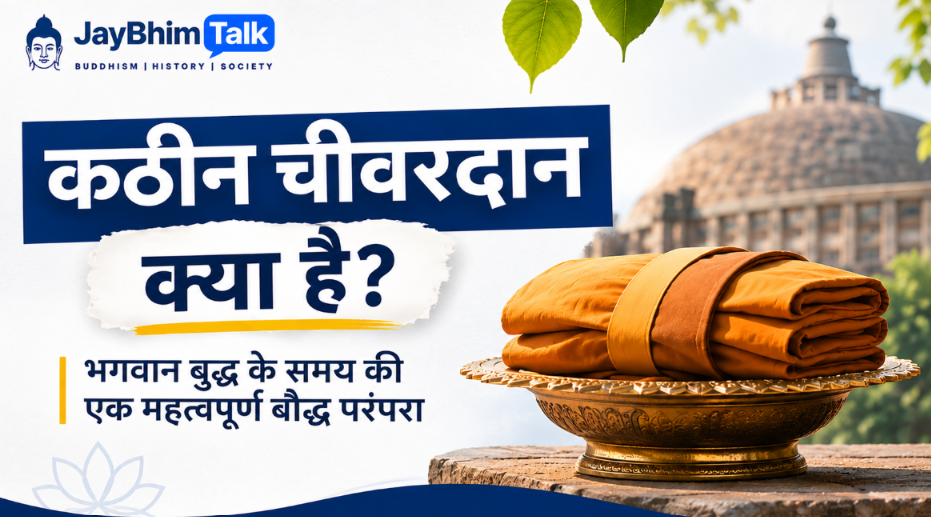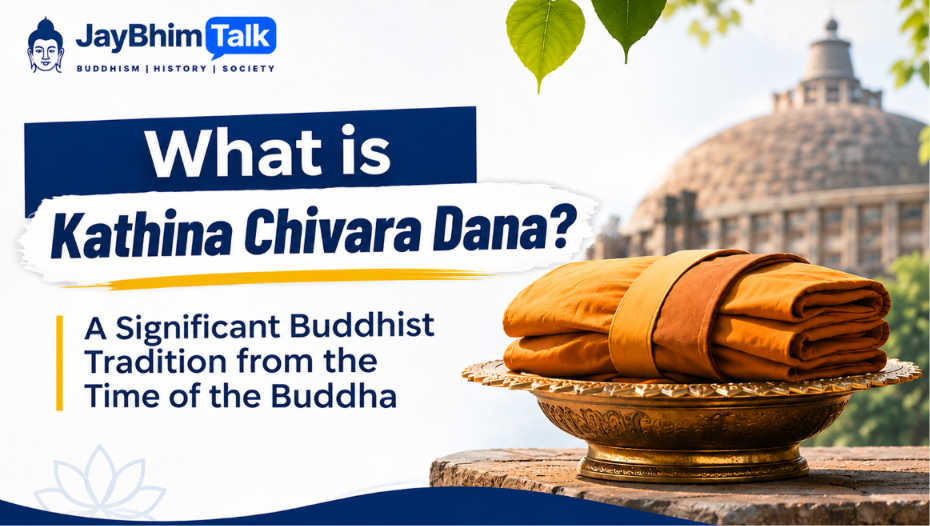
What is Kathina Chivara Dana? This is a question many people ask. Kathina Chivara Dana is an important and ancient religious tradition in Buddhism. After the completion of the Vassa (rainy-season retreat), lay devotees offer robes to the Bhikkhu Sangha, and the Sangha performs the Kathina ceremony according to specific Vinaya rules. This tradition is associated with the time of Gautama Buddha and is described in the Mahavagga section of the Buddhist Vinaya Pitaka.
Kathina Chivara Dana is not merely a custom of offering robes. It is a tradition that expresses generosity, unity, mutual support and gratitude towards the Dhamma. In this article, we will understand what Kathina Chivara Dana is, how it began, the historical incident behind it and its significance in Buddhism.

What Is Kathina Chivara Dana?
In Buddhism, the robe worn by a Bhikkhu is called a 'Chivara'. After the completion of the Vassa, lay devotees offer robe-cloth to the Bhikkhu Sangha during a prescribed period. The Sangha then performs the Kathina ceremony according to Buddhist Vinaya rules. This entire tradition is known as Kathina Chivara Dana.
In simple terms, Kathina Chivara Dana means offering robes with श्रद्धा to an eligible Bhikkhu Sangha that has completed the Vassa, followed by the formal acceptance and completion of the Kathina procedure according to the Vinaya.
Three concepts are important in this tradition:
- Kathina: A term associated with the special Vinaya procedure of the Kathina ceremony.
- Chivara: The robe worn by Buddhist Bhikkhus.
- Dana: An offering made with faith and without expecting anything in return.
One important distinction is that offering robes to a Bhikkhu on any day and performing Kathina Chivara Dana are not the same. Kathina requires the completion of the Vassa, eligibility, a prescribed time period and compliance with specific Vinaya rules.
Loading suggested post...
How Did Kathina Chivara Dana Begin? Its History During the Time of Buddha
The account of the origin of Kathina Chivara Dana is described in the seventh section of the Mahavagga in the Vinaya Pitaka, known as the Kathinakkhandhaka.
At that time, Gautama Buddha was residing at Jetavana Monastery in Sravasti. Around 30 Bhikkhus from Pava were travelling towards Sravasti to meet the Buddha. They had intended to reach him before the beginning of the Vassa.
However, as the beginning of the Vassa was approaching, they could not reach Sravasti in time. They therefore decided to spend the Vassa at Saketa, which was on their route.
After completing the three-month Vassa and the Pavarana ceremony, the Bhikkhus set out for Sravasti to meet the Buddha.
It was raining at the time. The roads were muddy and covered with water. Because of the difficult journey, the Bhikkhus' robes became wet and they were exhausted.
After reaching Jetavana Monastery, they met the Buddha and explained the difficulties they had faced during their journey.
Understanding the condition of the Bhikkhus, the Buddha permitted those who had completed the Vassa to undertake the Kathina procedure.
In this way, the Vinaya tradition of Kathina Chivara Dana began.
When Is Kathina Chivara Dana Observed?
Kathina Chivara Dana is not a tradition that can be performed at any time of the year. According to the Theravada Buddhist Vinaya tradition, a specific period is prescribed after the completion of the Vassa.
During the Vassa, Buddhist Bhikkhus generally stay in one place for three months. During this period, they study the Dhamma, meditate, practise spiritual discipline and observe the Vinaya.
After the Vassa ends, the Pavarana ceremony is held. The period for Kathina Chivara Dana begins after this ceremony.
Generally, this period falls between the full moon of Ashwin and the full moon of Kartik. However, the eligibility requirements and other conditions specified in the Vinaya must be fulfilled before the formal Kathina procedure can be performed.
What Is the Procedure for Kathina Chivara Dana?
Kathina Chivara Dana involves more than simply offering cloth. Buddhist Vinaya lays down a specific procedure for it.
- Lay devotees offer robe-cloth to an eligible Bhikkhu Sangha that has completed the Vassa.
- The Sangha follows the Vinaya rules to carry out the process of distributing the cloth.
- An appropriate Bhikkhu is selected and the Kathina robe is assigned to him.
- As required, the cloth is cut, sewn and dyed.
- The Kathina procedure is then formally completed.
Unity within the Sangha and adherence to the Vinaya are especially important throughout this process.
What Is the Significance of Kathina Chivara Dana in Buddhism?
Kathina Chivara Dana is not merely a religious custom. It represents several important values of Buddhist Dhamma.
1. The Importance of Dana
Dana holds an important place in Buddhism. Through Kathina Chivara Dana, lay devotees offer essential robes to the Bhikkhu Sangha without expecting anything in return. This expresses the spirit of selfless generosity.
2. Gratitude Towards the Bhikkhu Sangha
Supporting the Bhikkhu Sangha, which practises and shares the Dhamma, is one of the important values expressed through this tradition.
3. Unity and Solidarity Within the Sangha
During the Kathina procedure, the Bhikkhu Sangha must collectively follow the rules of the Vinaya. This highlights the importance of unity and mutual cooperation within the Sangha.
4. The Relationship Between Lay Devotees and Bhikkhus
In Buddhism, mutual support between householders and the Bhikkhu Sangha is considered important. Kathina Chivara Dana is one example of this relationship.
5. Simplicity and Renunciation
The life of a Bhikkhu is based on simplicity, discipline and the practice of the Dhamma. Offering robes helps fulfil the basic needs of the Bhikkhus.
What Is the Difference Between Kathina Chivara Dana and Ordinary Robe Offering?
Many people are not aware of the difference between an ordinary robe offering and Kathina Chivara Dana.
An ordinary robe offering can be made to an individual Bhikkhu or to the Sangha at any time of the year. Kathina Chivara Dana, however, requires the completion of the Vassa, observance of the prescribed period and compliance with specific Vinaya rules.
Therefore, not every robe offering can be called Kathina Chivara Dana. Kathina is a distinct and special procedure within the Buddhist Vinaya.
What Can We Learn from Kathina Chivara Dana?
The tradition of Kathina Chivara Dana teaches us the importance of generosity, cooperation, gratitude and unity.
Considering the circumstances of the Bhikkhu Sangha, the Buddha established the Kathina procedure within the Vinaya. This highlights the importance of understanding the needs of the Bhikkhus and supporting the Sangha.
Even today, Kathina ceremonies are organised in various countries that follow the Theravada Buddhist tradition. Lay men and women participate with faith and offer robes to the Bhikkhu Sangha.
Kathina Chivara Dana is not simply an offering of robes. It is a meaningful tradition of supporting the Sangha that practises the Dhamma and preserving Dhamma values through generosity.
Join Our WhatsApp Channel!
Get the thoughts of Dr. Babasaheb Ambedkar, the history of Buddha Dhamma and the latest updates directly on your mobile.
Kathina Chivara Dana is a historical and significant Vinaya tradition in Buddhism. Originating during the time of Gautama Buddha, this tradition preserves values such as generosity, unity within the Sangha, cooperation and gratitude. Therefore, understanding Kathina Chivara Dana requires looking beyond the act of offering robes and recognising its historical context and significance within the Vinaya.
Namo Buddhaya! Jai Bhim!
Reference: Vinaya Pitaka – Mahavagga, Section 7 (Kaṭhinakkhandhaka).
Frequently Asked Questions About Kathina Chivara Dana
Frequently Asked Questions (FAQs)
Kathina Chivara Dana is the tradition of offering robes to an eligible Bhikkhu Sangha after the completion of the Vassa, during the prescribed period, and completing the Kathina procedure according to the Vinaya rules.
According to the Mahavagga of the Buddhist Vinaya Pitaka, Gautama Buddha permitted Bhikkhus who had completed the Vassa to undertake the Kathina procedure.
According to the Theravada Vinaya tradition, the Kathina procedure is performed during the prescribed period after the Vassa and Pavarana, generally between the full moon of Ashwin and the full moon of Kartik.
Chivara is the robe worn by Buddhist Bhikkhus.
The origin of Kathina Chivara Dana and its Vinaya rules are described in the seventh section of the Mahavagga in the Buddhist Vinaya Pitaka, known as the Kathinakkhandhaka.
This specific Vinaya procedure of Kathina Chivara Dana is primarily observed in the Theravada Buddhist tradition. Other Buddhist traditions may have different practices of robe offering.