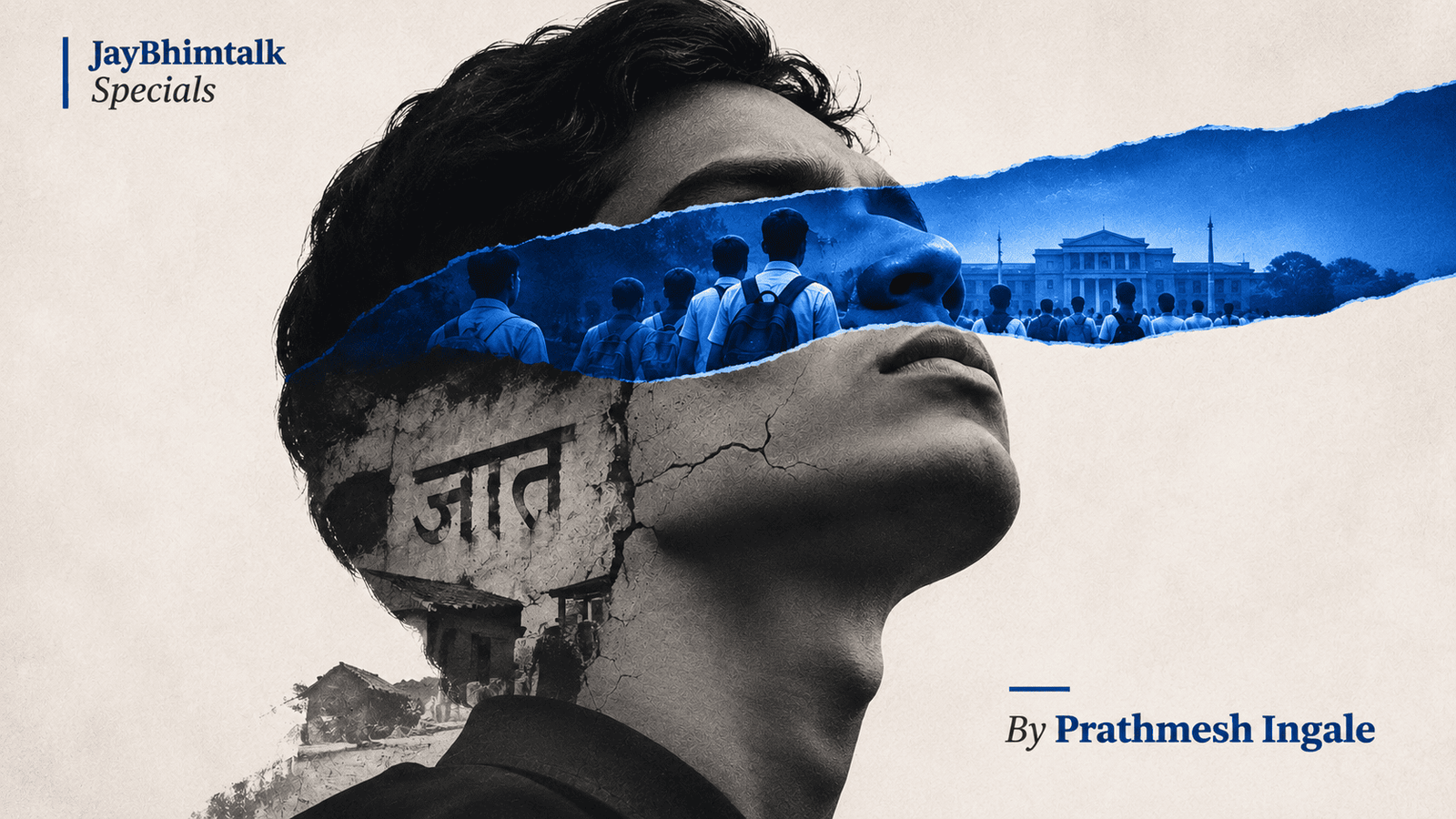
Ask a room full of Indians whether caste still matters, and you'll hear a familiar answer: "Not anymore. Nobody cares about all that today. " Then ask the same room about reservation, surnames, marriage or rented houses, and the mood changes quickly. Caste suddenly becomes relevant again.
That contradiction is why I wrote Caste Before Class: Reservation, Privilege and New Casteism. The conversation around reservation in India is full of half-truths, and I wanted to slow it down and look at the structure underneath. Poverty Is Not the Same as Caste The most common argument I hear is that a poor person is a poor person, whatever their category. It sounds fair, and I understand why people believe it.

But it misses something. Poverty can change. A family can earn its way out of it through a job, a business or a good education. Caste doesn't work that way.
It is attached to you at birth and follows you through your surname, your village, your background. A poor person from the General category struggles with money. A poor person from an SC or ST background struggles with money and with social exclusion. These are two different burdens, and treating them as one doesn't make the system fairer.
The Starting Line Was Never the Same For centuries, access to education, land and social dignity was decided by birth. Dharmashastra texts like the Manusmriti didn't just discourage learning for Shudras, they prescribed punishments for it. Property rights were denied. Resistance was met with brutal penalties.
Silence wasn't consent. It was survival. When people ask why many SC/ST families are still poor today, I think the honest answer is that their ancestors were systematically kept from building anything that could be passed down: land, savings, education, networks. One group has been running this race for thousands of years.
The other was allowed to join only about seventy-nine years ago. Judging both with the same stopwatch isn't neutrality. Privilege You Can't See Some of the most powerful advantages in life are invisible to the people who have them. A child who grows up hearing English at home, whose relatives know how interviews work, who can afford to take a drop year and try again, doesn't think of any of that as privilege.
It just feels like life. A first-generation learner often gets exactly one chance. There's no safety net, no one to call, no cousin who "knows someone. " A single failure can mean the end of a dream, because the family needs them to start earning.
Add the jokes, the taunts and the constant questioning of "are you here on quota? ", and the psychological weight becomes enormous. This is why I argue that merit never exists in a vacuum. Marks matter, but so do coaching, language, confidence and mental safety.
When we mistake access for talent, we end up celebrating privilege and calling it merit. Reservation Is Not Charity Reservation is often confused with welfare, but they do different jobs. Scholarships, hostels and fee waivers reduce economic hardship, and they should be available to every poor student. Reservation doesn't hand anyone money.
It ensures entry and representation in institutions that were once completely closed: bureaucracy, the judiciary, universities, policy-making spaces. Representation matters because lived experience matters. When decision-making rooms include people who know what discrimination feels like, issues of dignity and access are more likely to be taken seriously. And the numbers in higher bureaucracy, the judiciary and elite institutions show that reservation hasn't over-corrected anything.
It has only partly opened doors that were shut for centuries. Misuse Is Real, but It Doesn't Cancel Justice I don't pretend misuse doesn't exist. Fake certificates are a real problem, and they hurt the very people reservation is meant to support. But if someone cheats in an exam, we punish the cheat, not the exam.
What troubles me is the selective outrage. When a fake certificate involves an SC or ST candidate, it becomes a prime-time debate and a verdict on the whole system. When similar fraud turns up in other categories, it is often brushed off as an "exceptional case. " The real issue is weak verification and slow punishment.
The answer is reform: digital records, proper verification, strict and time-bound penalties. Not removal. Caste Has Learned to Smile Today there's no open ban on touching, and untouchability is abolished under Article 17. But if you look closely, caste has changed its language, not its logic.
It shows up when a new acquaintance asks your surname, and the tone shifts. It shows up in marriage, in housing, in "Which category are you? " Among younger people, it hides behind humour. Memes, reels and casual remarks about surnames and reservation are brushed off with "it was just a joke.
" But jokes are rarely aimed at the privileged. Repeated often enough, they chip away at a person's confidence and sense of worth. Online, mocking someone's caste can earn applause, while objecting to it earns abuse. That isn't the end of casteism.
It's casteism adapting. Not Caste versus Class I don't argue that economic poverty is unimportant. It deserves serious attention, and schemes like EWS solve a real problem. But they address income, not social exclusion.
A person can climb out of poverty and still be questioned about their merit because of their surname. So the choice was never caste or class. A system that helps the poor but ignores caste is incomplete. A system that talks about social justice but ignores economic hardship is incomplete too.
Real equality needs both. An Invitation, Not an Accusation This book isn't written to attack any community or to claim moral superiority. It doesn't ask for sympathy. It asks for honesty.
If you believe reservation has outlived its purpose, or that everyone starts from the same place today, I'm not asking you to agree. I'm asking you to read, think and question. Because social justice isn't a destination we've already reached. It's a process still unfinished, and abandoning it halfway won't create equality.
It will only make inequality invisible.

More from this author
Loading author posts...
JayBhimTalk Exclusive Articles by Famous Authors
Dive deep into our exclusive collection of well-researched, thought-provoking articles written by renowned scholars, historians, and social thinkers.
Explore All SpecialsMore from JayBhimTalk Special
Loading special posts...